
Blog
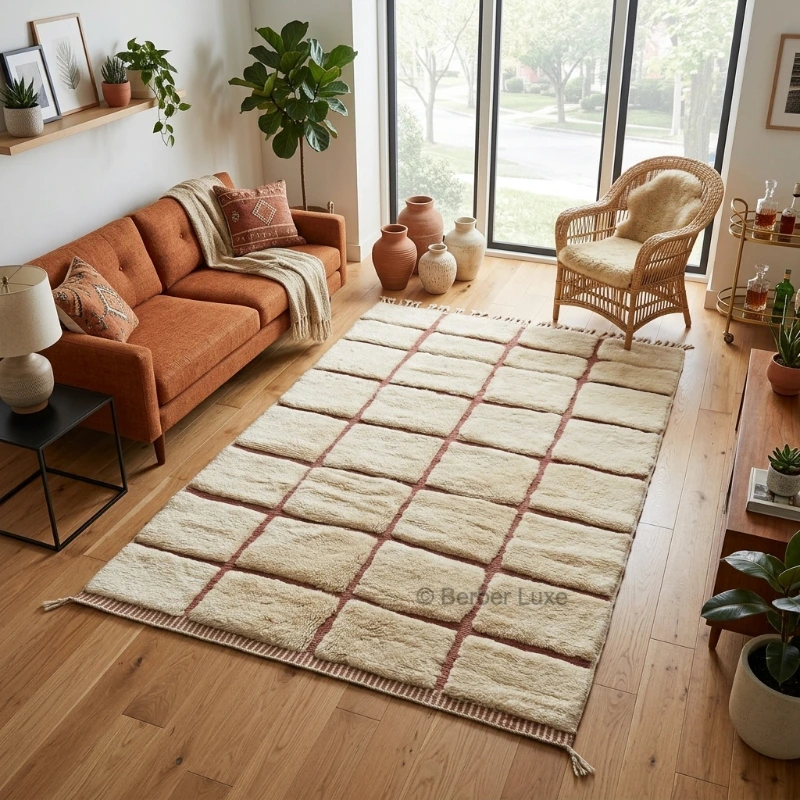
Choosing a Moroccan rug for your living room is about more than finding a beautiful pattern. The right rug can make a room feel warmer, more inviting, and visually balanced while adding a distinctive touch of Moroccan craftsmanship.
But with so many styles, colors, sizes, textures, and weaving techniques available, how do you know which Moroccan rug is right for your space?
The answer depends on several factors, including the size of your living room, your furniture arrangement, your preferred interior style, the amount of foot traffic, and how much maintenance you are prepared to do.
Whether you want a soft neutral rug for a modern interior or a colorful statement piece that becomes the focal point of the room, this guide will help you make the right choice.
Start With the Right Moroccan Rug Size
One of the most common mistakes when buying a living room rug is choosing one that is too small.
A rug should help visually connect your seating area rather than look like a small island placed in the center of the room.
Before shopping, measure your living room and consider the position of your sofa, armchairs, coffee table, and other furniture.
Should the Rug Go Under the Sofa?
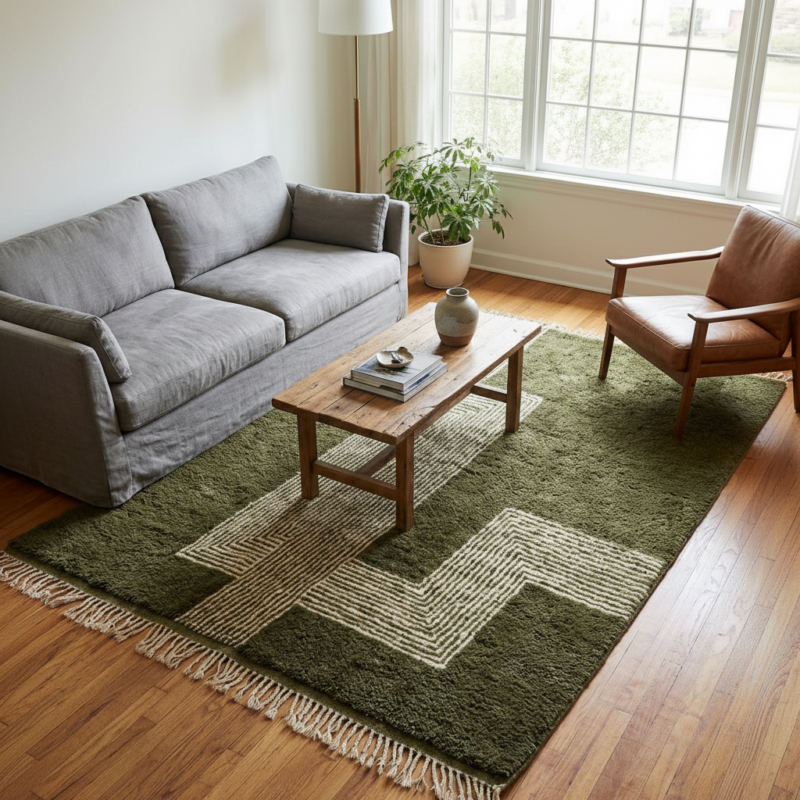
In many living rooms, the rug should extend beneath at least the front legs of the sofa and chairs. This helps create a unified seating area.
For a larger living room, you may prefer a rug large enough to accommodate the entire seating arrangement.
If your room is smaller, placing the front legs of the furniture on the rug can provide a similar effect without requiring an oversized rug.
Common Living Room Rug Sizes
Popular dimensions include:
- 5 × 8 feet: Suitable for smaller seating areas
- 6 × 9 feet: A versatile medium-sized option
- 8 × 10 feet: Suitable for many average-to-large living rooms
- 9 × 12 feet: Useful for larger seating arrangements
- 10 × 14 feet or larger: Appropriate for spacious rooms and open-plan interiors
The correct size ultimately depends on your furniture and floor plan rather than a single universal measurement.
Choose a Moroccan Rug Style That Fits Your Room
Moroccan rugs aren’t all alike. Different regions and weaving traditions produce rugs with distinctive colors, patterns, textures, and construction.
Understanding the differences can make it easier to narrow down your choices.
Beni Ourain Rugs
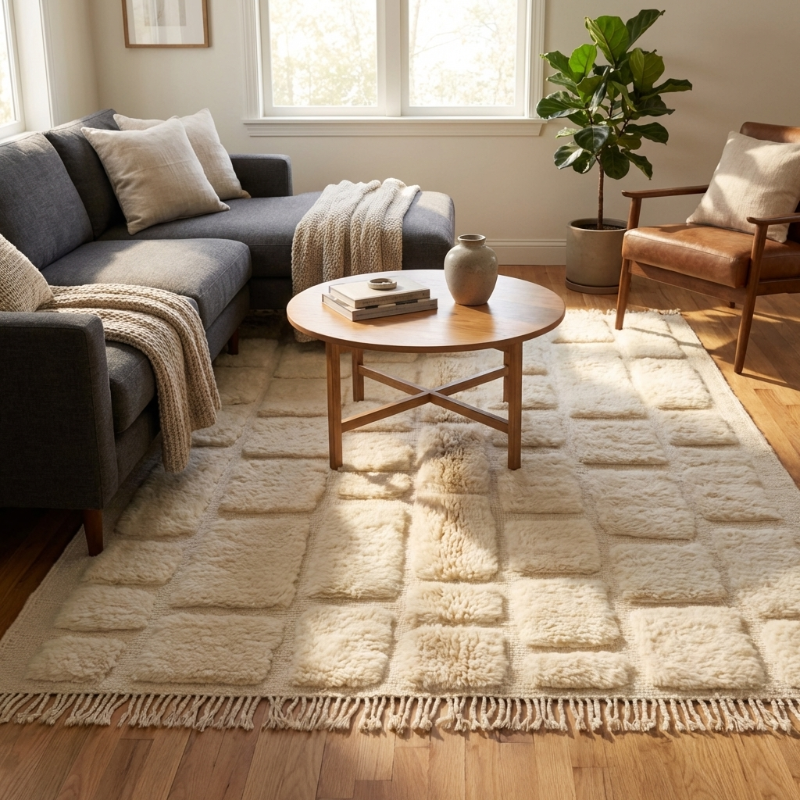
Beni Ourain rugs are particularly recognizable for their neutral palettes, often featuring ivory, cream, beige, or white backgrounds with dark geometric patterns.
Their understated appearance makes them easy to incorporate into contemporary, Scandinavian, minimalist, and modern interiors.
A Beni Ourain-style rug can be particularly effective when your living room already contains colorful furniture or artwork because its relatively restrained palette doesn’t compete for attention.
Boujaad Rugs
Boujaad rugs are known for expressive colors and distinctive geometric designs.
Depending on the particular rug, you may find shades such as red, pink, orange, purple, blue, or earthy neutrals.
A colorful Boujaad rug can work particularly well when the rest of your living room is relatively understated.
Mrirt Rugs
Mrirt rugs are often associated with dense, soft wool and a luxurious feel.
They can feature both neutral and colorful palettes and are an option to consider when comfort and texture are major priorities.
Their plush appearance can make them especially attractive in cozy living rooms where the rug is intended to contribute significantly to the room’s overall atmosphere.
Azilal Rugs
Azilal rugs are known for expressive geometric designs and artistic compositions.
They can introduce an eclectic or contemporary character into a living room and work especially well when you want the rug itself to become a visual centerpiece.
Boucherouite Rugs
Boucherouite rugs are often made from recycled or repurposed textiles rather than relying exclusively on traditional wool construction.
Their colorful, unconventional appearance makes them particularly suitable for bohemian, eclectic, artistic, and informal interiors.
Moroccan Kilims
Moroccan kilims are flat-woven rugs rather than thick, high-pile rugs.
Their flatter construction can make them practical in spaces where you want a rug with less bulk while still introducing Moroccan-inspired patterns and colors.
Pick the Right Rug Material
Material affects how a rug feels, how it looks, how it wears, and how much care it requires.
Why Wool Is Popular
Wool is one of the traditional materials associated with Moroccan rug making. A quality wool rug can provide warmth, softness, texture, and durability.
Wool can also have natural variations in color and texture, which contribute to the character of a handmade rug.
However, not every Moroccan-style rug on the market is handmade from traditional wool. If authenticity and craftsmanship matter to you, pay close attention to the rug’s construction, origin, materials, and seller information.
Natural vs. Synthetic Rugs
Synthetic Moroccan-inspired rugs can offer different advantages, including potentially lower prices and easier maintenance.
They can be worth considering if your priority is convenience, particularly in a household with heavy everyday use.
If you’re specifically looking for a traditionally handcrafted Moroccan rug, however, look beyond the appearance and investigate how the rug was actually made.
Choose the Right Moroccan Rug Color
Color is one of the easiest ways to determine whether a rug will complement or compete with your living room.
Start by looking at the colors you already have.
Consider your:
- Sofa
- Curtains
- Walls
- Flooring
- Cushions
- Artwork
- Decorative accessories
You don’t necessarily need the rug to match everything exactly.
Instead, look for colors that complement or connect different elements within the room.
Neutral Moroccan Rugs
Cream, ivory, beige, gray, and other neutral tones can create a calm and versatile foundation.
A neutral rug can be particularly useful when your furniture or walls already contain strong colors.
Colorful Moroccan Rugs
If your living room has a relatively neutral sofa and walls, a colorful Moroccan rug can introduce personality and become a focal point.
Rather than matching every color in the rug, choose one or two shades that already appear elsewhere in the room.
This creates visual cohesion without making the interior look overly coordinated.
Consider Rug Pile and Texture
Pile height affects both appearance and practicality.
High-Pile Moroccan Rugs
High-pile rugs tend to feel soft and luxurious underfoot.
They can work particularly well in relaxed living rooms where comfort is important.
However, thicker rugs can require more attention during cleaning and may not be ideal for every high-traffic environment.
Low-Pile and Flat-Weave Rugs
Low-pile and flat-weave rugs generally have a flatter surface.
They can be easier to position beneath furniture and may be more convenient in rooms where people frequently walk across the rug.
If you have a busy household, consider how the rug will function every day rather than choosing solely based on appearance.
Match Your Moroccan Rug With Your Furniture
Your rug and furniture should work together as a composition.
A neutral Moroccan rug can soften a room filled with bold furniture.
Conversely, a colorful patterned rug can add interest to a room dominated by neutral furniture.
Modern Furniture and Moroccan Rugs
Moroccan rugs can work beautifully with modern furniture.
A simple contemporary sofa paired with a textured Moroccan rug can create contrast between clean architectural lines and handmade texture.
Neutral Sofa and Colorful Rug
A neutral sofa gives you considerable flexibility.
If your sofa is beige, cream, gray, or white, a colorful Moroccan rug can become an attractive focal point without overwhelming the furniture.
Patterned Furniture and Moroccan Rugs
If your sofa, curtains, cushions, or artwork already contain prominent patterns, consider a rug with a simpler design.
When every element competes for attention, the room can quickly feel visually busy.
Think About Your Living Room’s Lifestyle
The most beautiful rug isn’t necessarily the best rug for your household.
Consider how the living room is actually used.
Do you have children? Pets? Frequent guests? Heavy foot traffic?
If the answer is yes, durability and maintenance should play an important role in your decision.
For a quieter, more formal living room, you may have greater flexibility with delicate textures and elaborate designs.
For an everyday family room, construction, cleanability, and resistance to wear may deserve more attention.
How to Place a Moroccan Rug in Your Living Room
Once you’ve chosen your rug, placement can dramatically affect the appearance of the entire room.
Start by positioning the rug so it visually anchors the main seating area.
The coffee table will commonly sit on top of the rug, with the sofa and chairs arranged around it.
Avoid placing a small rug completely separate from the furniture. This can make the seating arrangement feel disconnected.
For an open-plan room, a large Moroccan rug can also help define the living area without requiring walls or partitions.
Common Moroccan Rug Buying Mistakes to Avoid
Buying a Rug That’s Too Small
This is perhaps the most common living-room rug mistake.
Always measure before purchasing and consider the complete furniture arrangement.
Choosing Color Without Considering the Room
A rug may look beautiful on its own but clash with your existing interior.
Look at the room as a whole before choosing a color palette.
Ignoring Pile Height
A thick, luxurious rug may not be the most practical choice for every household.
Think about cleaning, furniture placement, foot traffic, and everyday use.
Prioritizing Appearance Over Construction
Two rugs can look similar while having very different construction, materials, and quality.
If you’re purchasing a handmade Moroccan rug, ask questions about its materials, construction, origin, and craftsmanship.
Choosing Too Many Patterns
A statement rug works best when the rest of the room gives it enough visual space.
If your room already has several strong patterns, consider a more restrained rug design.
How to Care for a Moroccan Rug
Proper care can help preserve the appearance and condition of your rug.
Regular vacuuming can remove everyday dust and debris. For high-pile rugs, use a vacuum setting appropriate for the rug’s construction.
If something spills, address it promptly rather than allowing the liquid to soak deeply into the fibers.
Rotating the rug periodically can also help distribute wear more evenly, particularly in areas where people walk repeatedly.
Avoid exposing delicate rugs to prolonged direct sunlight when possible, as strong sunlight can affect some dyes and fibers over time.
For valuable handmade rugs, follow the care instructions provided by the seller or manufacturer and consider professional cleaning when appropriate.
How to Choose the Right Moroccan Rug at a Glance
If you’re still unsure which type to choose, use this simple decision guide:
- For a neutral modern interior: Consider a Beni Ourain-style rug.
- For a colorful statement: Look at Boujaad-style designs.
- For softness and luxury: Consider a plush wool rug such as a Mrirt-style rug.
- For an artistic, eclectic interior: Explore Azilal-style designs.
- For bold, unconventional color: Consider Boucherouite rugs.
- For a flatter construction: Look at Moroccan kilims.
- For busy households: Prioritize suitable construction, durability, and maintenance requirements.
- For small rooms: Measure carefully before choosing a large rug.
- For open-plan spaces: Consider a larger rug that clearly defines the living area.
Frequently Asked Questions About Moroccan Living Room Rugs
What size Moroccan rug is best for a living room?
The best size depends on your living room and furniture arrangement. Common choices include 5 × 8, 6 × 9, and 8 × 10 feet, while larger rooms may require a 9 × 12-foot rug or larger. Ideally, the rug should visually connect the main seating area.
Should a Moroccan rug go under the sofa?
Yes. In many living rooms, placing at least the front legs of the sofa on the rug creates a more cohesive seating arrangement. A larger rug can extend beneath the sofa and chairs completely.
What color Moroccan rug goes with a neutral sofa?
Almost any color can work with a neutral sofa. Neutral Moroccan rugs create a calm appearance, while colorful rugs in shades such as red, orange, pink, blue, or purple can create a stronger focal point.
Are Moroccan rugs good for high-traffic living rooms?
They can be, but the best choice depends on the rug’s construction, material, and pile. For busy rooms, consider durable construction and a pile height that is practical for everyday cleaning.
Are Moroccan rugs suitable for homes with pets and children?
They can be, but consider your specific rug’s material, pile, color, and care requirements. A durable, relatively easy-to-maintain rug may be more practical than a delicate high-pile design.
What is the difference between a Beni Ourain and a Boujaad rug?
Beni Ourain rugs are commonly associated with neutral backgrounds and geometric designs, while Boujaad rugs are often more colorful and expressive. Individual rugs can vary considerably, so construction and origin should also be considered.
How do you clean a Moroccan wool rug?
Regularly remove dust and debris using an appropriate vacuum setting. Deal with spills promptly and follow the specific care instructions for your rug. Valuable handmade wool rugs may benefit from professional cleaning.
Can you put a Moroccan rug in a modern living room?
Absolutely. Moroccan rugs can complement modern interiors particularly well because their handmade textures and geometric designs create contrast with clean-lined contemporary furniture.
Conclusion
Choosing a Moroccan rug for your living room comes down to finding the right balance between size, style, color, material, texture, furniture placement, and lifestyle.
Start by measuring your space and determining how the rug will interact with your furniture. Then consider the atmosphere you want to create.
A neutral Beni Ourain-style rug can provide understated warmth, while a colorful Boujaad or artistic Azilal-style rug can make a stronger statement. A flat-weave kilim may suit a different set of practical needs, while a plush wool rug can emphasize comfort and texture.
Most importantly, don’t choose a Moroccan rug based on appearance alone. Consider how it will function in your home every day.
The right rug should not only look beautiful—it should make your living room feel more complete, comfortable, and distinctly yours.